

We have all been there: sitting in a quiet room with a blank notebook, wishing our thoughts had a voice of their own. Maybe you are stuck on a creative block or just need a sounding board for your daily reflections. Usually, you are left scribbling alone. But what if your notebook didn't just passively collect your ink, but actually conversed with you? Imagine writing a question by hand, watching the ink fade away like magic, and seeing a handwritten reply appear right there on the page. It sounds like a scene straight out of Harry Potter, but thanks to a brilliant hack by developer Maxime Rivest, this magical reality is now possible with the reMarkable Paper Pro.
The Tom Riddle Experience: A Diary That Actually Answers
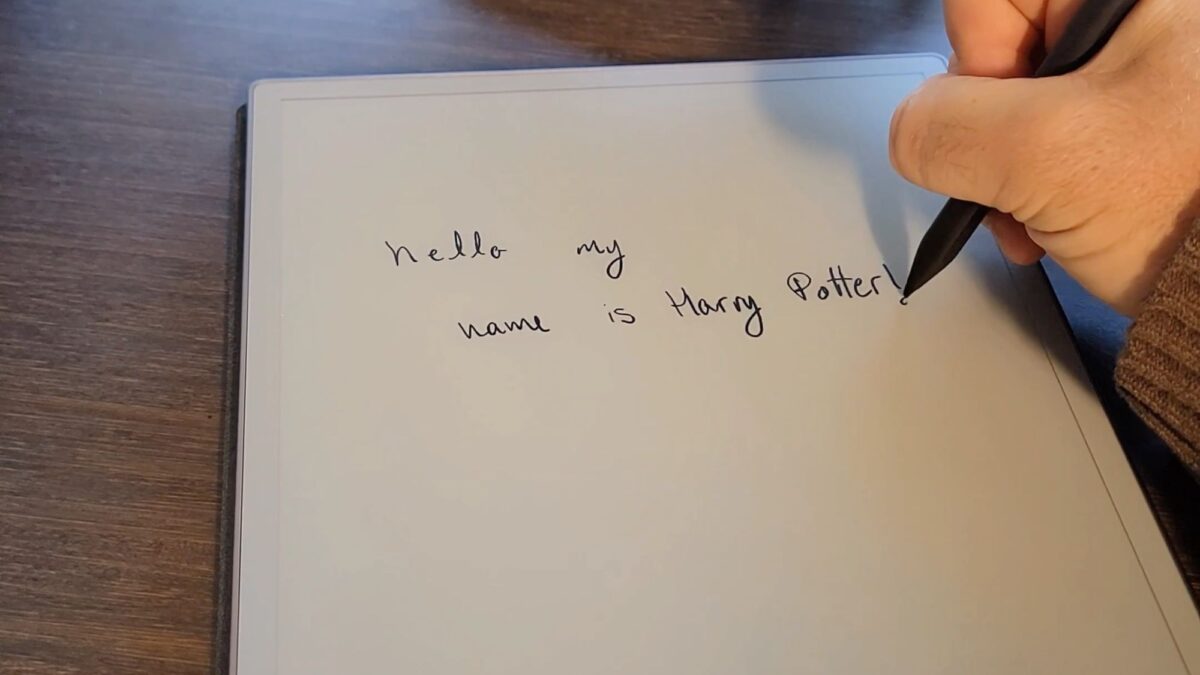
Rivest has created a project he calls "Riddle," and it essentially transforms the reMarkable Paper Pro into that iconic, interactive Horcrux diary. You don't need a wand, just a stylus and a bit of curiosity. When you write a question on the E Ink screen, the tablet's developer mode captures your handwriting and sends it to an AI model (utilizing Fable). The magic happens a second later: your text is programmatically erased from the page, and a response—formatted to look like a matching, flowing handwriting—is animated onto the screen.
This isn't just a parlor trick; it completely changes the feel of digital note-taking. Instead of staring at a cursor or reading a typed printout on a screen, you are engaging in handwritten dialogue. It preserves that tactile, brain-boosting benefit of writing by hand while giving you the instant feedback of a smart assistant.
Behind the Magic: Unlocking the Linux Powerhouse
For those wondering how an E Ink tablet known for its simplicity pulls off real-time AI interactions, the secret lies in the reMarkable's hidden capabilities. Most owners don't realize that devices like the Paper Pro are essentially Linux boxes waiting to be explored. By activating the developer mode, Rivest was able to hook coding agents into the tablet via SSH.
This level of access allows for a direct interception of the display and input layers. The fading-and-appearing text trick is a result of the developer having granular control over the screen's redraw cycle. While reMarkable's official AI tools focus on transcribing meetings or summarizing agendas, this hack bypasses the standard interface entirely. It hijacks the writing surface itself, turning a productivity tool into a dynamic conversational agent.
Beyond the Diary: A Voice-First Writing Assistant
The magic doesn't stop at the diary hack. Rivest has also developed a companion Voice Dictation App for Android that pairs with the tablet. This app turns your phone into a microphone, allowing you to speak your thoughts naturally before grabbing your reMarkable to edit and refine the text on its paper-like surface.
According to the developer, this workflow—combining rapid voice input with deliberate handwritten editing—creates a "special" writing feel that smartphones and laptops just can't match. It addresses a major pain point in modern tech: we dictate better than we type, but we think better when we write. This solution bridges that gap perfectly.
Why This Hack Steals the Show
Even with competitors like the Amazon Kindle Scribe introducing AI chatbots for querying books, and reMarkable's own Paper Pure offering meeting summaries, these hobbyist projects feel different. Official tools are safe, contained within a productivity framework. Rivest's "Riddle" and voice projects represent ambient AI—technology that blends seamlessly into the ritual of writing rather than interrupting it.
It is important to note that enabling developer mode on these devices can be technical and may affect your warranty, making this best suited for those who love to tinker. However, the developer has promised a beginner-friendly version eventually.
Final Thoughts: Who Is This For?
If you are a tinkerer at heart, a fan of magical realism, or simply someone who wants your digital notes to feel less like a database and more like a conversation, this is the ultimate E Ink experiment. It proves that the best human-computer interaction might not be on a glowing app screen, but right there on the paper-like surface where your thoughts begin.
Are you ready to bring a little magic back to your desk hacks and write a future where your notes write back?