

If you’ve been staring at a dozen browser tabs, trying to figure out whether “Tandem OLED” is a genuine game-changer or just marketing noise, I see you. I’ve been exactly where you are. Every time the Computex headlines drop, suddenly everyone is shouting about 540 Hz refresh rates, 5K resolution, and panel tech that sounds like it belongs in a lab. It’s easy to get overwhelmed.
But here’s the honest truth: when you’re sitting at your desk, the only thing that matters is whether that monitor makes your games look alive and your competitive edges sharper. You don’t need to memorize every engineering acronym; you just need to know which 2026 screen actually transforms your setup. I’ve cut through the press release noise to break down the displays worth your time, so you can stop guessing and start planning your upgrade.
The Brightness Breakthrough: Why Tandem Tech Changes Everything
For years, OLED was the undisputed king of contrast but the pauper of brightness. Dark room gaming? Perfect. Sunlight streaming through a nearby window? Washed out. 2026 finally flips that script. The new generation introduces tandem and penta-tandem panel designs, which stack extra emissive layers to push brightness into the 1,300–1,500 nit range.
This isn’t just for spec-sheet bragging rights. It means you can finally enjoy perfect OLED blacks and vibrant highlights in a normal living room, without feeling like you need to close the curtains.
The Dream-Big Flagship: Alienware 39 5K OLED (AW3926QW)
This is the monitor that made everyone stop scrolling. The Alienware 39-inch 5K OLED isn’t just "big"—it’s a visual anchor for a high-end desk. It features a 1500R curve and uses RGB stripe tandem technology to deliver a massive 1,300 nits of peak brightness.
The real magic is its dual-mode versatility. You can flip it into 5K at 165 Hz for lush, cinematic open-world exploration, or shift to 1080p at 330 Hz when you switch to competitive shooters. With a built-in KVM and 90W USB-C, it effortlessly doubles as a high-end workstation by day. If you’re looking for a screen that replaces everything else on your desk, this is the flagship dream you wait for.
The Sweet Spot: MSI vs. ASUS in the 32-inch 4K Arena
If 39 inches swallows your entire desk, the 32-inch category is the new playground. MSI’s MPG OLED 322URDX36 introduces a "Triple Mode" that lets you seamlessly shift between 4K at 360 Hz, 1440p at 520 Hz, and 1080p at 680 Hz, depending on the game. It hits a blistering 1,500 nits with a DisplayHDR True Black 600 rating.
Not to be outdone, ASUS’s ROG Swift OLED PG32UCWM focuses on longevity. By using GaN-based power and cooling, ASUS cuts waste heat significantly. This targets the number one worry keeping gamers off OLED: burn-in. If you want a clean, cool-running 4K panel that handles creative work and gaming, this efficiency upgrade is a massive win.
The Speed Demons: Esports Meets OLED
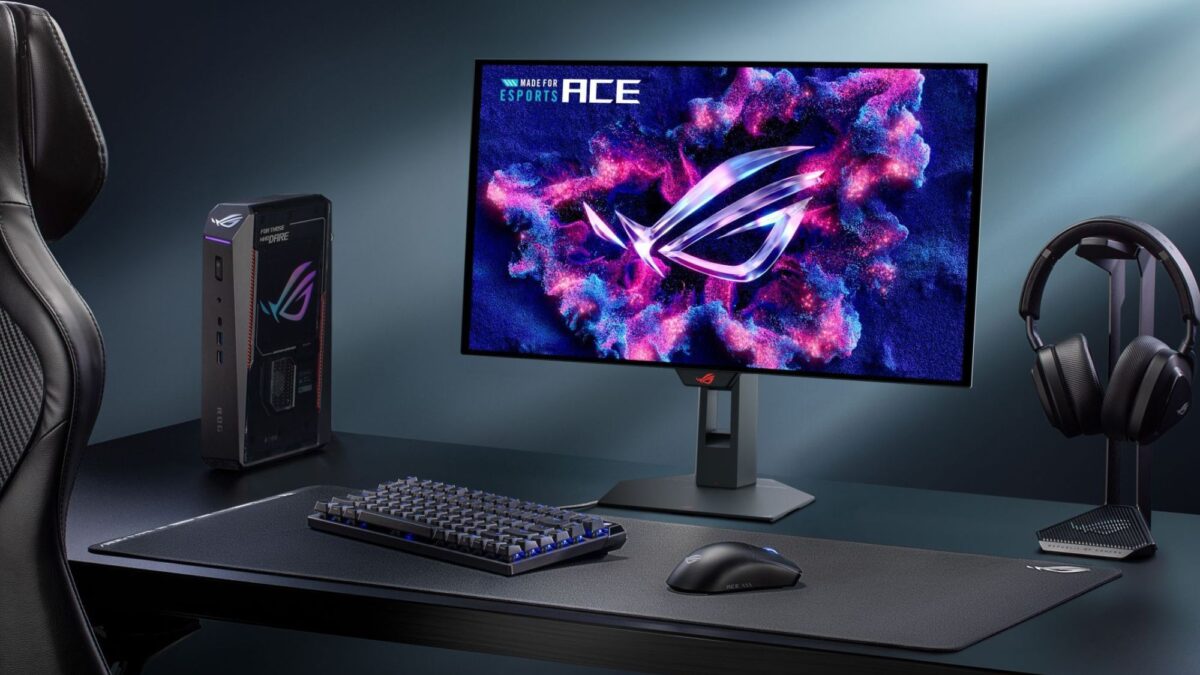
For competitive players chasing every millisecond, size doesn't matter—speed does. ASUS dropped the world’s first OLED esports monitor: a 24.5-inch 1080p panel running at 540 Hz with a 0.02ms response time.
It keeps the compact, focused form factor competitive players love, but finally swaps out those washed-out TN panels for OLED’s perfect contrast. If you prefer a slightly larger screen, the AOC AGON Pro pushes a 27-inch panel to 540 Hz (boosting to 720 Hz at 720p), bringing that blistering speed to a more immersive size.
The Practical Picks & Value Plays
Sometimes you don't need the bleeding edge; you just need the complaints fixed. The Alienware AW3426DW is the "grown-up" successor to the beloved 34-inch ultrawide. It bumps brightness to 1,300 nits, raises the refresh to 280 Hz, and adds a new anti-reflective coating that cuts glare by 30%. It’s the easy recommendation for anyone who wanted an ultrawide but hated the glare issues.
And for those watching their budget, Alienware’s new VA panels skip OLED to hit $299.99 for a 32-inch 240 Hz display. It’s a genuine 2026 upgrade for the price of a midrange accessory, proving you don't need flagship money to get a fast, modern panel.
Which 2026 Monitor Fits You?
- The Immersive Gamer: Wait for the Alienware 39 5K or the MSI 322URDX36 for maximum versatility.
- The Competitive Shooter: Grab the ROG Strix 540 Hz OLED or the AOC 27-inch speedster.
- The Practical Upgrader: Look at the refined 34-inch ultrawide or the value VA panels to refresh your setup without overspending.
Before you fall in love with these specs, measure your desk depth. A 39-inch curve needs real room to breathe. Then, align your budget with your timeline: July is your window for value and ultrawide picks, while the true flagships arrive in the fall.
You don’t buy a monitor for the spec sheet. You buy it for the moment that screen wakes up, the OLED blacks hit zero, and your setup finally feels exactly how you imagined it. The 2026 lineup is ready for you.