

Imagine a busy Tuesday morning. You’re rushing to get out the door, coffee in one hand, keys in the other. Your phone is buzzing in your pocket, reminding you of a meeting, a dry cleaning pickup, and a text you really need to reply to. Usually, you’d dump everything, unlock the screen, tap through three apps, and type a response. But what if you didn’t have to? What if the device in your pocket didn't need to be the center of your attention to get things done?
For years, we’ve been upgrading our phones chasing the next "smarter" chip, hoping for a seamless experience. But after Google I/O 2026, the conversation has shifted. The search isn't just for a faster phone anymore; it's for an ecosystem where the device works in the background, almost like magic, handling life’s chaos while you stay focused on the now. We finally found it.
The Phone Isn’t the Brain It’s Just the Interface
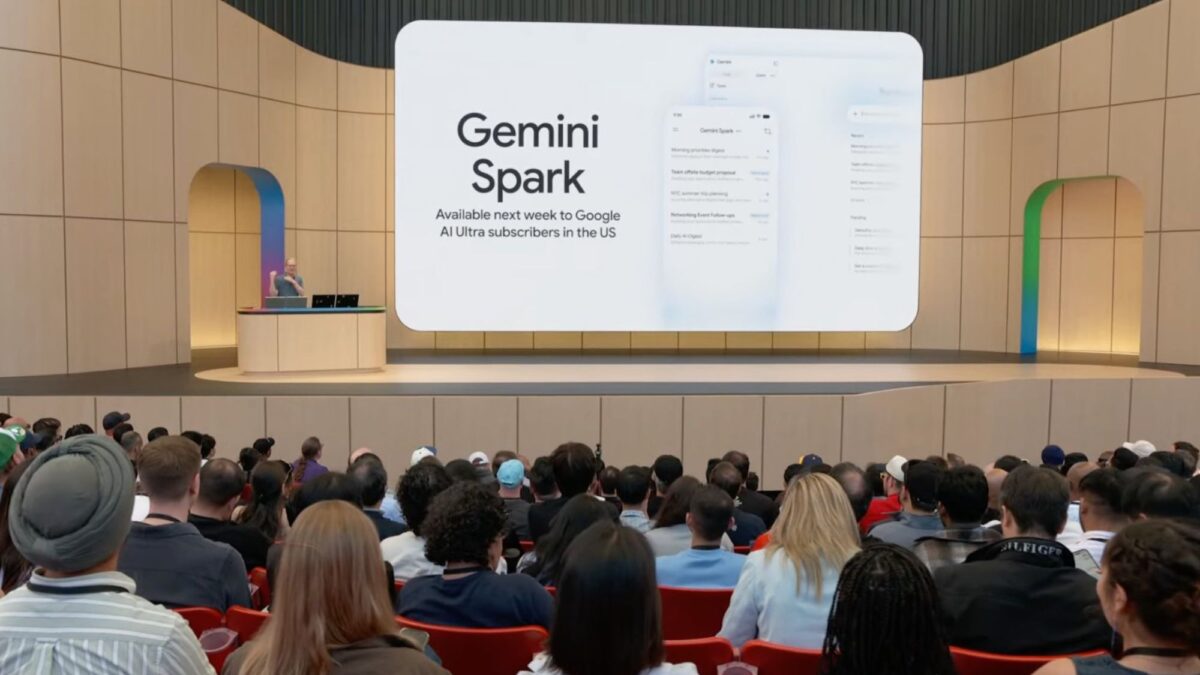
There was a quiet but revolutionary moment at the keynote. Josh Woodward, while demoing Gemini Spark, stacked a voice command to handle three separate complex tasks and simply put his phone face-down on the table. He didn't pick it up again. The phone sat idle, doing nothing, while the AI did everything.
This signals a massive shift: The brain of your operation is no longer living in your device.
Gemini Spark runs Google Cloud’s dedicated virtual machines. It’s not relying on your phone’s processing power. It’s accessible 24/7, whether your devices are on, off, or buried at the bottom of a gym bag. Your phone has effectively transitioned from a "supercomputer in your pocket" to a high-quality sensor array—a microphone to hear you, a camera to see for the AI, and a screen for when you want to look.
Why the Silicon Arms Race is Over
If you're tired of the endless $1,200 flagship price tags, this is the news you’ve been waiting for. For 15 years, we've been told we need a better NPU, a faster chip, and more RAM to run the latest apps. But when the cognitive heavy lifting is outsourced to the cloud running at nearly 1,500 tokens per second, the hardware race changes.
This ecosystem offers incredible freedom:
- Longer Device Lifespans: You don't need the fastest chip to run the smartest AI. A reliable connection and good battery life are the new metrics that matter.
- Seamless Continuity: Whether you’re on Android Halo, a lightweight macOS app, or smart glasses, the experience follows you. The AI remembers the context, not the device.
- The "Phone-Optional" Lifestyle: With agents managing your RSVP lists, drafting follow-ups, and prepping slide decks from a single voice prompt, your phone is no longer the bottleneck.
Your Wearables Become Powerful Agents
This shift makes wearables genuinely useful for the first time. During the demo, a pair of Gentle Monster smart glasses didn’t just take audio commands; they negotiated the entire world. They ordered a nitro cold brew from DoorDash and added dinner to the calendar.
Crucially, the intelligence wasn't in the glasses. The intelligence was in Gemini. The glasses were just the window, and the phone in the pocket was merely a relay station. This means smart glasses become viable productivity tools, not just fancy headphones. If your AI lives in the cloud, the form factor on your face doesn’t need to be a supercomputer—it just needs to be comfortable, stylish, and always listening.
Is This the Future You Need?
Google might have just disrupted its own hardware business by proving that the software ecosystem matters more than the hardware specs. But for us, the users, it’s a dream scenario. It means we can stop obsessing over specs sheets and start focusing on how much time and friction this AI removes from our daily lives.
This ecosystem is perfect for:
- Digital minimalists who want to reduce screen time but keep their productivity high.
- Busy professionals who need an assistant that works across devices without friction.
- Anyone who is "always on" but tired of being tethered to a glowing rectangle.
Computing has finally moved out of the way. It’s time to let the AI handle the noise, so you can get back to living. If you’ve been waiting for a tech upgrade that actually makes your life simpler instead of more complex, the answer is finally here—and it doesn't require a new phone to start.