

We’ve all been there. You step into a sprawling convention center, a multi-floor hospital, or a bustling airport terminal, and suddenly, you’re met with a massive, outdated wall map. Your phone loses its indoor signal, the static signs don’t account for last-minute room changes, and that quick coffee run turns into a stressful maze-walking session. Getting lost indoors feels frustratingly common in an age where we expect seamless directions everywhere. But the way we navigate large physical spaces is quietly leveling up, and it’s completely reshaping how guests experience modern venues.
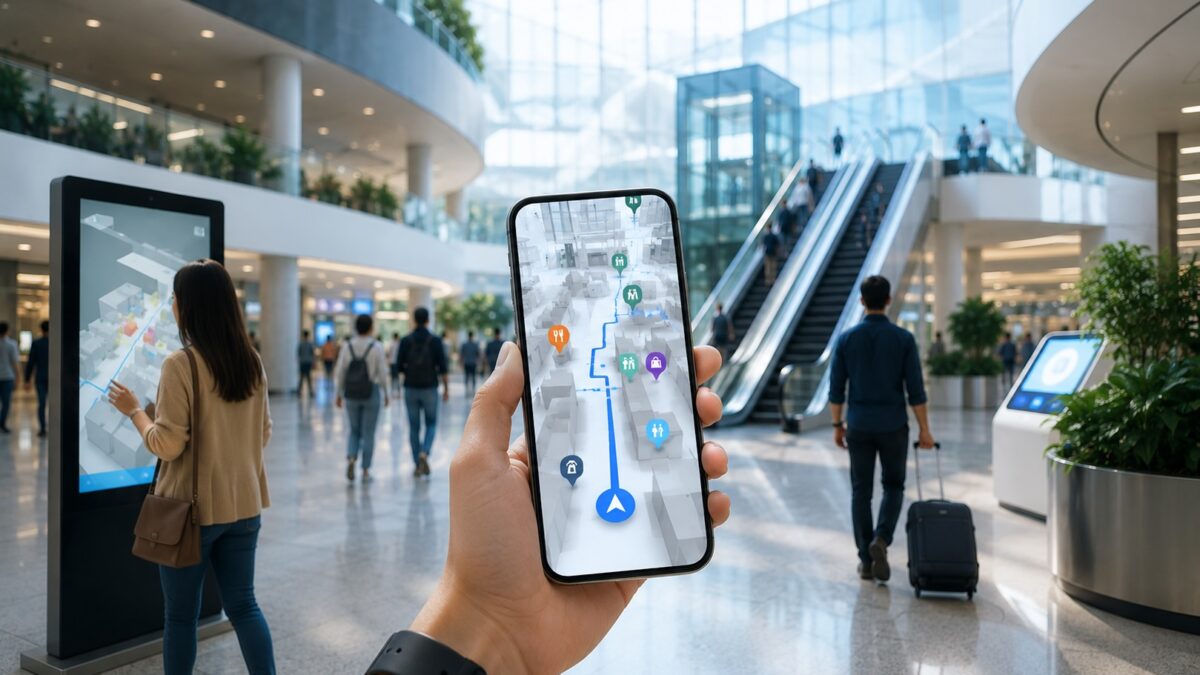
From Static Signs to Real-Time Smart Guidance Traditional exit markers and room numbers will always have their place, but modern venues simply move too fast for painted walls or printed directories to keep up. Gate changes, department relocations, and pop-up event floor plans happen daily. A true digital wayfinding system steps in exactly where static signs fall short. Instead of guessing or waiting in line to ask a staff member, visitors tap into live, interactive screens that update the moment a hallway closes or a schedule shifts. The result? A polished, thoughtful environment that respects your time and instantly lowers the mental load of finding your destination. When spaces feel intuitive, they feel premium. That seamless flow is what separates a frustrating visit from a truly memorable one.
Your Personal Indoor Navigation Ecosystem The real magic of modern indoor navigation lies in how it connects across multiple touchpoints. It’s rarely just one screen in a lobby; it’s a synchronized network designed to meet you exactly where you are: • Interactive Touch Kiosks: Perfect for quick, on-the-spot decisions. Type in a convention booth, specialty clinic, or campus building, and get a clear, color-coded route instantly. • Mobile App Handoff: Start planning your route before you even exit your car. Keep step-by-step directions running on your phone, receive live parking updates, and get push notifications if a session room changes last minute. • Precision Indoor Mapping: GPS struggles under concrete and steel, which is why smart spaces rely on a blend of Wi-Fi triangulation, Bluetooth beacons, and visual positioning to pinpoint your exact floor, corridor, and even orientation.
This multi-layered approach means you aren’t just handed a static map—you’re handed a dynamic compass that adapts as you walk, eliminating those awkward “which way do I turn next?” moments entirely.
AI-Powered Flow and Inclusive Design What truly sets a next-generation smart space apart is how it reads the room—literally. AI doesn’t just draw a straight line on a screen; it continuously optimizes it. It analyzes real-time foot traffic to route visitors around temporary construction zones, redirects crowds away from bottlenecks near popular dining areas, and suggests the least congested entrance during peak hours.
Beyond speed, digital wayfinding is fundamentally more inclusive. A single wall map rarely serves everyone equally, but digital systems naturally adapt. They can highlight step-free elevator routes, switch to high-contrast displays for low-vision visitors, expand text size, or switch instantly into dozens of languages. Research consistently shows that when navigation feels predictable and clear, visitor anxiety drops sharply, and task completion speeds up. For venue managers, it’s a strategic advantage: aggregated search data reveals exactly which rooms or services visitors look for most, helping teams optimize staffing, reposition physical signage, and redesign floor layouts based on actual behavior rather than guesswork.
For healthcare administrators, campus directors, retail operators, and event producers, upgrading to a responsive indoor navigation network isn’t just a tech upgrade—it’s an experience overhaul. It turns chaotic footprints into curated, stress-free journeys. When a space is designed to be effortlessly understood, visitors stay longer, staff interruptions drop, and your brand simply feels more reliable. Step away from the confusing wall map and give your guests the clarity they actually expect. Navigation shouldn’t be an obstacle to overcome; it should be your venue’s quietest, most powerful strength.