

We’ve all been there. You’re sitting at your favorite corner café, laptop open, ready to crush your to-do list. But as soon as you fire up a dozen browser tabs and join a video call, that dreaded fan noise kicks in, shattering your focus. Or worse, you zip up your bag and realize your "portable" laptop weighs just as much as a brick.
For years, we’ve looked at the MacBook Air with envy—admiring its silence but wishing for Windows flexibility. Windows users have been stuck making a compromise: accept the noise, deal with the heat, or carry the bulk. But at IFA 2026, Lenovo introduced a concept that might finally solve this engineering puzzle. Enter the Lenovo Project AeroBlade, a laptop so thin and light it feels like a glimpse into the future of computing.
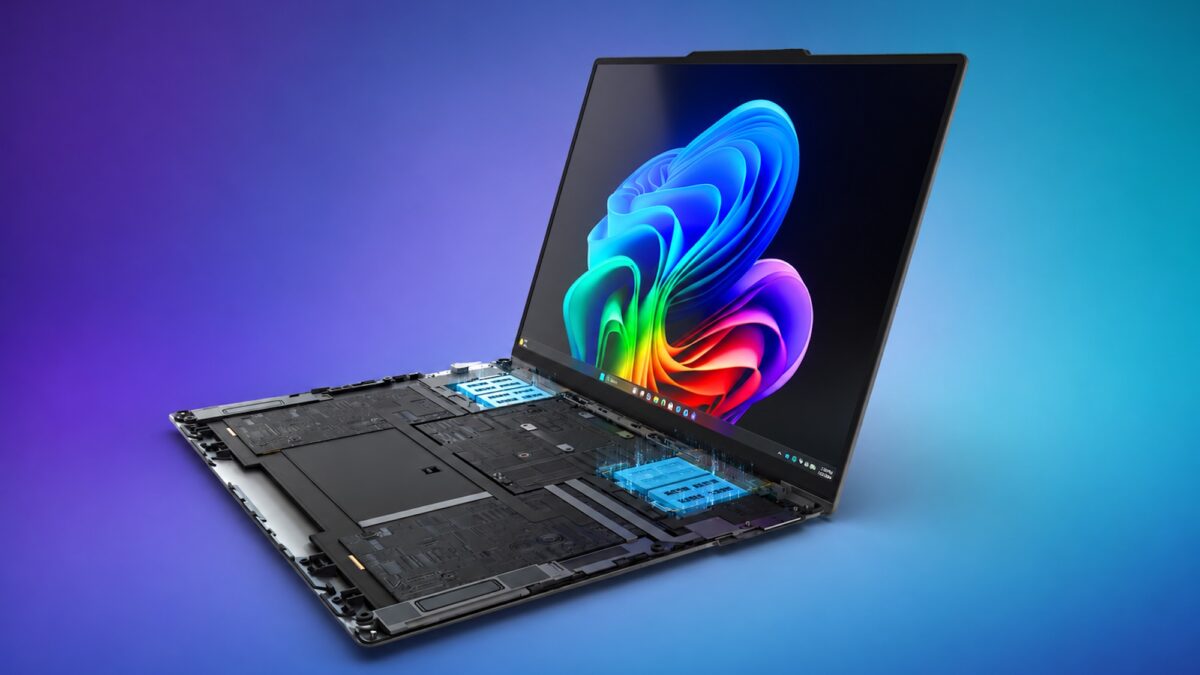
A Featherweight Champion That Redefines "Thin"
When you first hear the specs, they sound almost impossible. This is a 14-inch laptop that measures less than 10mm thick and weighs under 830g (1.83 lbs). To put that in perspective, a Verge reporter noted you could lift this machine from a corner using just a thumb and an index finger.
Lenovo isn't just shaving off millimeters for marketing fluff. They've managed to squeeze in a stunning OLED display, Wi-Fi 7 connectivity, and Intel's Lunar Lake hardware into a chassis that rivals the slimmest tablets. For the digital nomad or the creative professional constantly on the move, this is the kind of portability that changes how you work.
Ditching the Fan: How Solid-State Cooling Changes Everything
Here is where the AeroBlade truly breaks the mold. You won't find a single traditional cooling fan inside. We all know that "fanless" designs usually come with a painful trade-off: the laptop gets quiet, but the processor throttles down to prevent overheating, killing your performance.
Lenovo is tackling this with Frore’s AirJet solid-state cooling technology.
- How It Works: Instead of spinning blades, the system uses tiny piezoelectric membranes to create rapid air movement into the chassis.
- The Result: You get active cooling without the moving parts.
- Performance Gains: Frore’s modules can handle up to 30W of heat dissipation. This means the laptop can maintain high performance without the thermal ceiling that usually plagues ultra-thin devices.
Imagine getting that pristine, library-level silence you love about the MacBook Air, but with the active thermal management needed to keep your Windows workflow smooth and uninterrupted.
Why This Could Be the Ultimate MacBook Air Alternative
The search for the perfect MacBook Air alternative isn't just about copying Apple; it's about finding a machine that fits your workflow without the ecosystem lock-in. The AeroBlade suggests that Windows manufacturers don't need to beat Apple on raw power to win; they just need to offer a better balance of silence, weight, and thermal efficiency.
With its OLED screen offering vibrant colors for media consumption and a chassis thin enough to slip into any tote or messenger bag, this concept addresses the exact pain points of modern mobile workers. It's proof that you don't have to choose between a silent workspace and a powerful engine.
The Verdict: Ready for the Real World?
It is important to note that the Project AeroBlade is currently a proof-of-concept. Lenovo is still testing the waters, and a final production model would likely ship with even newer silicon and potentially different real-world battery life numbers. However, this concept validates a massive shift in laptop engineering.
Who is this for?
- Writers & Coders: Who need absolute silence to focus for hours.
- Frequent Travelers: Who count every gram in their carry-on.
- Windows Power Users: Who want ultrabook portability without being forced into macOS.
The AeroBlade proves that the days of choosing between noise, heat, and bulk are numbered. If Lenovo can turn this concept into a shippable reality, the MacBook Air may finally have a worthy rival—and for anyone craving a silent, featherlight powerhouse, we are absolutely ready for it.