

You've seen the concept videos. Sleek cars sprouting rotors, promising you'll dodge rush-hour traffic forever. But where do you actually park a flying vehicle? Who insures it? And when it crashes onto asphalt, what happens? The dream has always been grounded by one stubborn reality: a flying car trying to be both a car and an aircraft ends up being mediocre at both.
Then XPENG ARIDGE did the one thing nobody expected. They stopped trying to fly the car—and started carrying the aircraft instead.
One Button. Five Minutes. Two Vehicles.
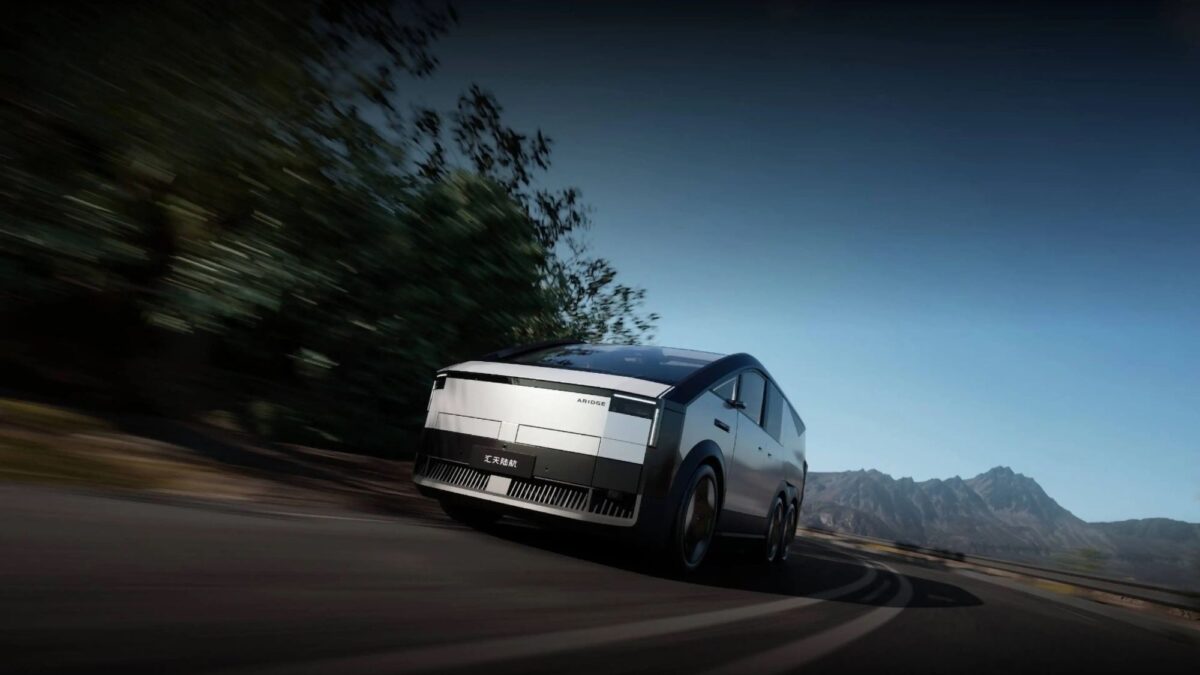
Here's the part that actually makes sense: pull over, tap a button, and over the next five minutes the air module quietly lifts out of the trunk. What you're left with is a perfectly normal, fully legal four-seater you can drive home, park in your garage, and take to the grocery store.
No pilot license required. No vertiport needed. Just a car that happens to carry a flying machine in its back.
This is the genius of the XPENG ARIDGE Land Aircraft Carrier—it splits the job. The car stays a competent car. The aircraft stays a competent eVTOL. No compromise. No death trap of cramming aviation safety into a chassis designed for potholes.
The Six-Wheeled Carrier Nobody Is Talking About
Strip away the quadcopter, and the land vehicle steals the show.
ARIDGE built a 6×6 with rear-wheel steering and an 800V silicon-carbide range-extender, delivering a claimed 1,000 km of range. At 5,500mm long and just 2,000mm tall, it actually fits inside a standard parking garage—which is more than most "futuristic" vehicles can say.
But here's where it gets clever:
- The carrier doubles as a mobile supercharging station, topping up the aircraft while driving or parked
- One full charge supports up to six flights
- No waiting for cities to build expensive vertiports—XPENG just drives the infrastructure to you
While every other air taxi startup is stuck waiting for municipal grid connections that may never come, ARIDGE simply brings the charging station with it. Pragmatic? Absolutely. Brilliant? Even more so.
What About the Flying Part?
The X3 air module weighs roughly 700 kg, seats two, and delivers up to 35 minutes of flight time on a three-hour charge. It features a 270-degree panoramic cockpit, six electric VTOL propellers, and two ducted fans.
Is it the DeLorean we were promised in Back to the Future? No. But it's also the first modular flying car that doesn't require you to rewrite every traffic law on the planet to own it.
Who Is This Actually For?
The Land Aircraft Carrier isn't for commuters dodging morning gridlock. It's for:
- Early adopters who want a taste of personal aviation without the regulatory nightmare
- Outdoor adventurers who need to reach locations roads simply don't go
- High-net-worth buyers looking for the ultimate conversation piece that actually works
At around $280,000, it's not cheap—but it's also the first flying vehicle concept that doesn't ask you to suspend your disbelief to buy it.
XPENG spent 13 years making this thing real. The gap between flying-car promises and actual products has always been frustratingly wide. But for the first time, someone stopped trying to make a car fly—and started making an aircraft portable instead.
The future of personal flight isn't a car with wings. It's a car that carries wings.
And honestly? That's the version we can actually drive home.